

Data First Paradigm for Enterprise Apps
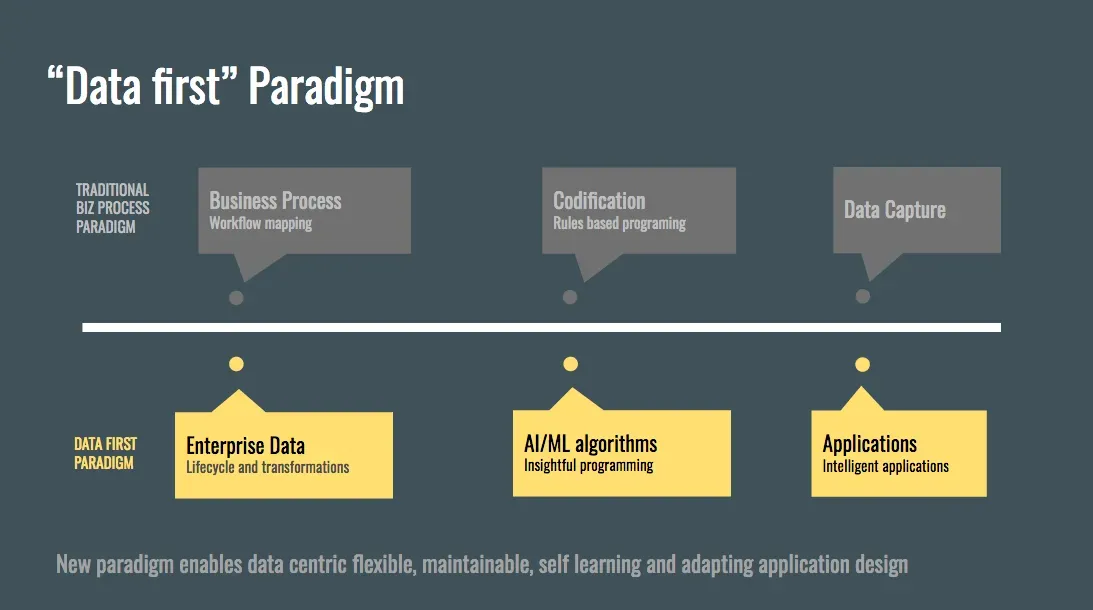
Until very recently, enterprise applications had a particular modus operandi. Almost all of them started with business processes and focused on how to develop/implement a software solution which would enable the business process to be performed inside an application.
At a very high level, the implementation of this M.O. was a two-step process:
- Establish the business process and develop workflows
- Program or codify business processes inside the application
Data First Paradigm for Enterprise Apps | by LUMIQ.AI | LUMIQ | Medium
SAP and Oracle were the leaders who followed this “business process paradigm”. These apps were supposed to capture the data as it moved across the enterprise.
Fast forward to the start of the “data” era. With the advent of cloud and democratization of AI technology, a new wave of applications started emerging. Data became the new oil (or gold) and a new paradigm started emerging with the Big Data tech maturing.
The new wave of enterprise apps starts with the data itself — what the lifecycle is, how data flows with the organizations and how it is transformed during its journey. Data is the starting point and the AI algorithms along with insightful programming are used to create apps which automatically create the optimal business process based on the data journey. This is the new “data first” paradigm. Data determines the process.
Each new wave of incoming data transforms the application and refreshes the underlying models. As a result, the new paradigm enables a data-centric, flexible, easy to maintain, self-learning and adaptable application design- for now and the future.
The paradigm shift is interesting and we at Lumiq are a 1000% onboard with it. The future is data and we are betting on it. What about you? We would love to hear your story.